
Episode 63 features my conversation with John Spignesi — guitarist, songwriter, and frontman of the John Spignesi Band.
In this episode, John talks about the making of his band’s new album and the unique experience of working with Max Creek’s Scott Murawski as producer. John shares how Scott’s guidance shaped the sound of the album, what the creative process was like in the studio, and how this new chapter reflects the growth of the John Spignesi Band. John also reflects on the role of music in his life and his opportunities to play with members of Max Creek outside of the studio.
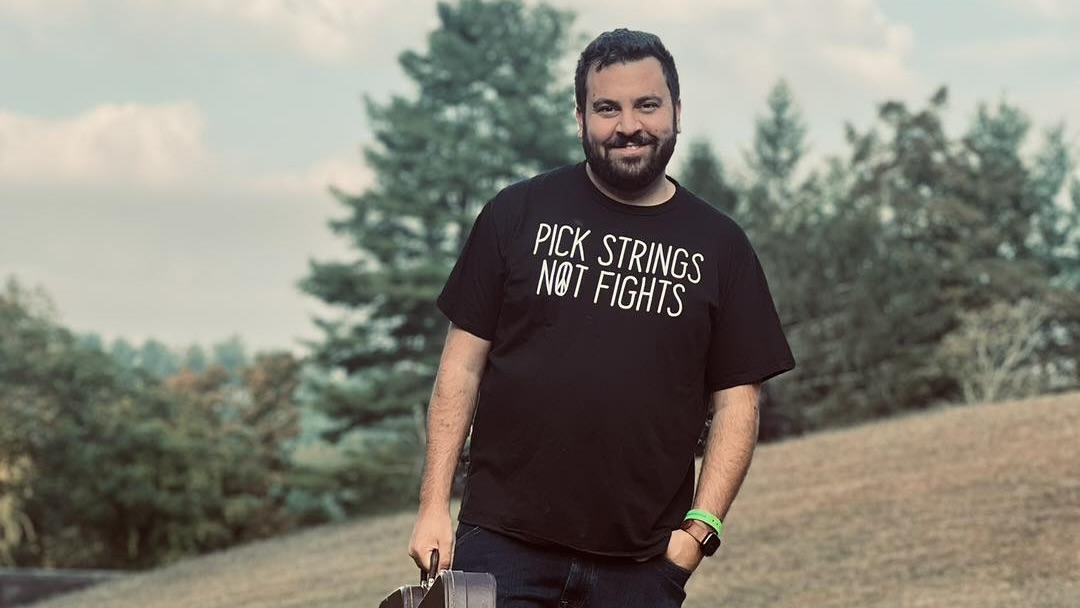
This episode also features clips of the following songs performed live by the John Spignesi Band:
- Feelin’ Free performed at Hoops N’ Hops in Simsbury, Connecticut, on November 16, 2024, with special guest Scott Murawski.
- Blank Canvas performed at Newburyport Brewing Company in Newburyport, Massachusetts, on May 3, 2025.
- Tough Guy performed at The Juke in Deep River, Connecticut, on April 11, 2025.
- Prepare For Liftoff performed at Stony Creek Brewery in Branford, Connecticut, on February 22, 2025.
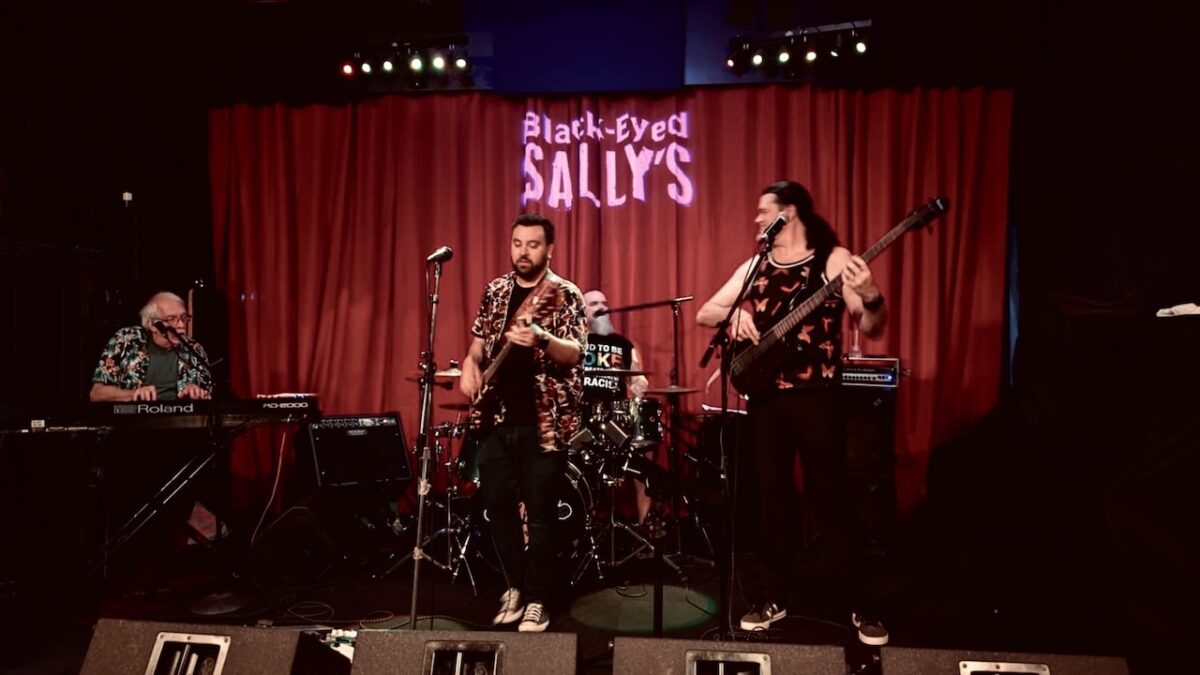
- Mystery Man performed at Black-Eyed Sally’s in Hartford, Connecticut, on June 28, 2025 with special guest Mark Mercier.
Transcript of episode 63
You’re listening to Hooked on Creek, a podcast celebrating the music, history and fans of the legendary jam band Max Creek. I am your host, Korre Johnson, and you are listening to episode 63.
Thanks for joining me on Hooked on Creek. In this episode, I’m excited to welcome back John Spignesi to the podcast. It’s been over five years since John last joined me on this podcast, and he has been busy making a lot of music with the John Spignesi Band since we last talked, including working on the band’s seventh studio album.
In this episode, John provides a behind-the-scenes look of his band’s new album, produced by Scott Murawski from Max Creek. He shares what it was like working with Scott in the studio and how Scott’s guidance shaped both the process of recording and the sound of the album. John also reflects on collaborating with Mark Mercier in the studio, as well as his experiences playing alongside members of Max Creek outside of the studio.
In fact, this episode kicked off with a clip of the John Spignesi Band performing their song Feelin’ Free live with special guest Scott Murawski at Hoops N’ Hops in Simsbury, Connecticut, back on November 16, 2024.
In addition to his band’s new studio album, John talks about the friendships, collaborations, and sense of community that fuel his music, and he opens up about the powerful role music continues to play in his life.
I had a great time catching up with John, and I think you’re really going to enjoy our conversation. Now, to add just a little flavor to this episode, I also included a few more clips of the John Spignesi Band performing live, but I encourage you to check out Spotify or Apple Music to hear the studio versions of the songs coming out on the new John Spignesi Band album. I think you are really going to enjoy what this band has created. Alright, now here’s my conversation with John Spignesi.
[interview begins]
Korre: John Spignesi, welcome back to Hooked on Creek.
John: Korre, it’s been a while, man. Thanks for having me back. I appreciate it.
Korre: Yeah. Well, it’s been over five years since we last spoke back on episode nine. I’m curious, John, what’s new in your world right now?
John: Well, we went through a pandemic, and we went through quite a bit since 2019. I just want to say, too, before we go any further — I’ve been following your podcast since even prior to the first time I was on it. And it’s awesome, man, that you’re still doing it. I listen to every episode, so hats off to you. I wanted to say that first.
Korre: Thank you.
John: Since 2019, I’ve been playing a lot, working on a new album, and collaborating with a lot of other people, too. I’ve really been enjoying the community process a little more these days, as opposed to back in 2019, and just tapping into all the wonderful networking I’ve been able to do.
Korre: Maybe for our listeners, reintroduce us to the John Spignesi Band. Who’s in the band? How long have you been around?
John: Sure. Ten years — this year in 2025. We’ve got a way to go to catch up to 54 for Max Creek, but we’ll get there when we can. Ten years I don’t think is anything to shake off, too, so I’m pretty proud we’ve been at it that long.
It’s myself on guitar and vocals, Joe Jeffery on bass and vocals, and then Matt Alling on drums, who is also a founding member with me. Quick little story that I’m sure you’ll appreciate hearing. The band was not supposed to be named after myself. I know you’re probably like, “Yeah, OK” but allow me to briefly explain.
So, I was in a band prior to JSB called Off the Dome. We were called Off the Dome because we’d make stuff up off the top our heads. We had a lot of improvisation, a la jam band style. Our singer for that band worked in a hospital. He worked as a pharmacy technician, but he had like crazy hours because he was new. So, he didn’t have any sort of regimented schedule. One week he’d be working 12 to 12. Next week he’d be working like 6 to 9.
So, we would have these like periods of time where we couldn’t play. And I was like, I can’t do this. I can’t go through these stints of like not having music. So, our original bass player, Bob LaCroix, he was a local guy who lived in the same town as me. He’s like, “Oh, we can do like a band if you want to do something, like just a local thing.” What did he say? “Keep your chops up.” And I was like, “Oh, sure.”
So I go, “I all right. What do you want to call it?” He goes, “Oh, no, I already have the name.” And I was like, “What?” He goes, “We’re going to call it the John Spignesi Band.” And I was like, “I don’t want name it after myself. Why would I name a band after myself?” He goes, “Well, if I name it after you, I could just show up and play and you got to bear all the responsibility.” And I was like, “Screw it. Whatever.”
Five years later, Bob’s like, “Hey, man, I’m moving to Maryland. Sorry, I got to quit the band.” I’m like, “OK.” Now I’m stuck with the band. It’s named after myself. The guy who made me name it after myself isn’t in the band anymore. So, long story short, here I am 10 years later. And so, it’s the worst thing ever when I go to check in at a festival and they’re like, “What band are you in?” I’m like, “The John Spignesi Band.” And they’re like, “And who are you?” I’m like, “John Spignesi.”
Korre: I think it worked out for you. You can wear your own band’s t-shirt and you’re like promoting your band and you’re introducing yourself at the same time.
John: I guess it’s true. And I get to see all the mispronunciations, but you nailed it, man. You nailed it on the first try. No one ever does that.
Korre: Well, John, I understand you’re working on your seventh album now and Scott Murawski is a producer on the album. I want to dig into that, before we do, maybe just reflect a little bit on the last six albums and the process to get to this point.
John: In the beginning, it was all about creating music where it felt like you were in the room with us. You know I mean? I wanted it to feel like you walked into the room and then the band was in there playing for you. And that was honestly my mindset from 2017 when we did the first record all the way up until the pandemic pretty much.
And honestly — and I will give him his kudos, I’m sure, as it goes on — but Scott actually taught me a lot about like, you know, you can almost have a different mindset when you go into the studio, as opposed to playing live. You can layer all of these sounds. You can add all these different instrumentations. And then obviously, of course, when you play it live, people will see what kind of band you really are and what you bring to the songs.
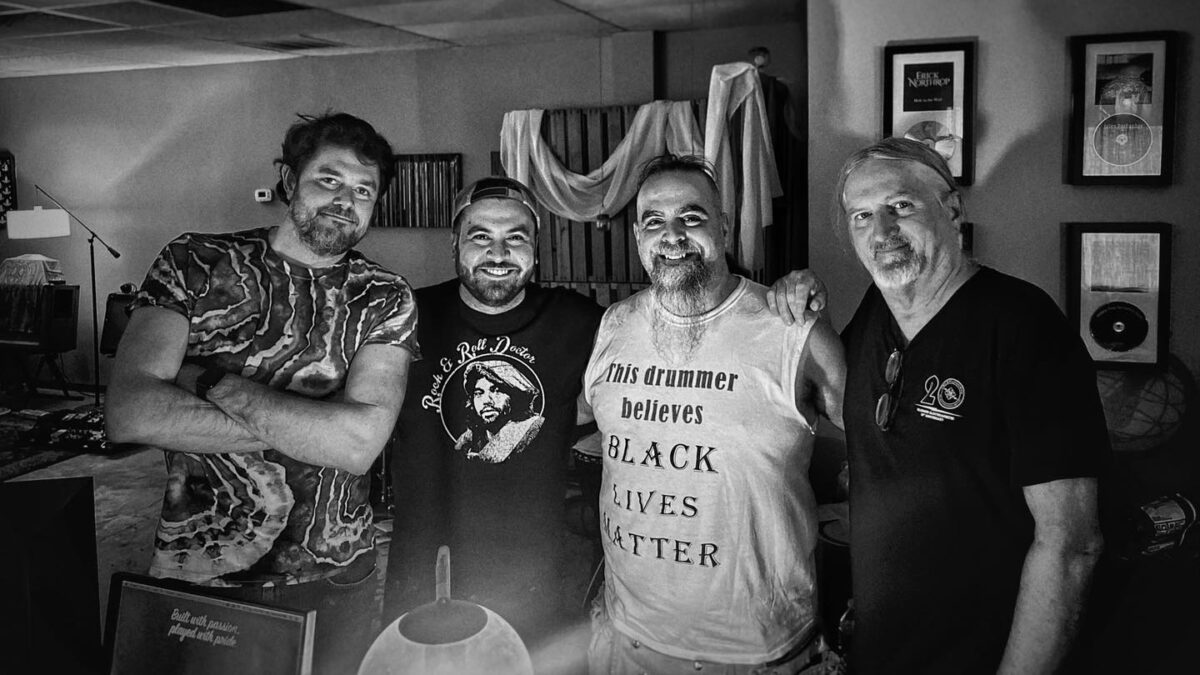
I will say recording is my least favorite and favorite thing at the same time. I know that you need to do it in order to stay relevant, because that’s how people discover music. I’m big on Spotify. I know people love Spotify and all of that kind of stuff. Just the process itself is terrifying to me because, I mean, we’re all our own worst critic. I’m sure you listen to episodes of your own podcast. You’re like, “Why am I referring to that question that way? Why did I talk like that?”
I listen to things — we’ve released four songs off this album so far. I’m texting my band members. I’m like, “At one minute and 46 seconds, dude, I hit a clam.” And they’re like, “Nobody cares. Nobody cares. Nobody knows what you’re talking about.” So, it’s a double-edged sword. But it’s fun. It’s a fun process, every single time we do it, because we’ve been working with the same guy since the beginning in the studio, with the exception of one short little EP release. I learn more and more every single time, and it helps me grow. Like I said, the networking is a big part.
The best thing about this album is it’s our band, but I’ve recruited so many of my friends to just play on this album. And I’m so proud. I’m showing other people and I’m like, “That’s my buddy playing right there.” You know what I mean?
Korre: Where are you right now in the overall production process? Are you done with the album? Almost done. Where are you at in this?
John: So, it’s completely done. It’s completely mixed. I have the masters of everything. We’ve been doing — I have been analyzing how people listen to music. Unfortunately, a lot of people don’t listen to just full albums anymore. We listen to full shows because we’re jam band freaks, and we can listen to two and a half hours without hesitating. I know you’re the same way, too.
For me, I realized, people’s attention span just isn’t what it used to be. I mean, look at social media and look at all these kind of things. If you won’t hook people within the first like three seconds, you ain’t gonna get a listener. So, I approached our sound engineer, and I was like, “I can’t get crickets after we released this, after all the hard work that everybody put into it.” I’m just like, “It’s gonna drive me nuts if we release this whole thing and I get like two listeners on it. So, he’s like, “Well, each song tells its own story. Each song is unique in itself. Why don’t you release one song every five weeks?”
And so that’s what we’ve been doing. I started it in April. We released the first track, Blank Canvas, and then Feeling Free. Mystery Man, which you’ve heard. The next track comes out like mid-August. So, it’s been fun because I can kind of focus on each individual song and tell its unique story and create social media content based around that one song as opposed to just trying to create one thing that encapsulates the whole album. Will it work? I don’t know.
Korre: Well, where did these songs come from? I mean, were they in your head or in your live performances for many years? Where did you source this material from?
John: One thing that we’ve always tried to do is we road test everything. You know, so some of these songs, I think Mystery Man, goes all the way back to 2017 or 2018. We got to play them, arrange them, and learn how they work well live in order to make a better studio performance.
Most of these we’ve been playing for four, five, six years before we even got into the studio. In the studio, time is money. I can’t be trying to remember what my part is while we’re trying to record, because I’ll end up breaking the bank even more than I already am. So, when we come in there, everybody knows their part. We can knock out three or four takes without breaking a sweat just because we’ve been playing them for so long.
Then we’ll add different things afterwards — layers and that kind of stuff. But the goal always is to get the bare-bones take first. And that’s something we learned right before the pandemic hit. If we can play together in the room — the guitar, the bass, the drums first — get the feel of the song, then all the layers afterwards will only enhance it. Because the energy is already there. We already got that bare-bones take. We already got the vibe there. That’s the process so far.
Korre: How long did it take from your first recording session until you said it’s done, or it became done? How does that process take for this album?
John: Two years.
Korre: Is that normal? Too long? Not long enough?
John: No, no. So, Scott joked to me, I want to say right when COVID hit. He was like, “Looking forward to producing that album.” We had talked about it briefly. I don’t know if it was in jest, but I’m the type of person who’s like, “Well, you said it, so I’m going to take you up on it.”
He said to me, he goes, “Well, if you want somebody that’s deaf and has never produced before, I’m your guy.” I was like, “Well, if you want a band that trusts the guy who’s deaf and has never produced before, we’re your band.”
So, he came over to our bass player’s house. We did a rehearsal session. Just the littlest things he recommended — never once offered to change the song, he didn’t want to do that because then it wouldn’t sound like us anymore. But he knew these little things that we could do. You know, “Why don’t you accent that certain part right here? That chord change right there, be a measure behind it instead of on top of it.” Little things like that added so much just in the rehearsal.
Then we got into the studio, and he threw his headphones on, and he walked us through the entire process. We had one song, Tough Guy, it took 15 takes to get. Because he added this really cool recommendation to it. But the arrangement — the song itself — is only about like 2 minutes and 40 seconds, but it doesn’t stop moving the entire time. I have it on video.
That’s the other thing — I recorded this entire process on video of us. So, I have gigabytes and gigabytes of footage. Maybe I’ll do a Get Back-style documentary one day. It’s gonna take forever to go through all of it, but very helpful.
Korre: Well, help me understand, because I really don’t know this, what is the role of a producer on an album? And then tell me more about Scott’s role. But just generally, what does a producer normally do helping an artist like you in the studio?
John: I think the main thing is to help create whatever vision come to life. Our main goal was we were always trying to push ourselves. And I’ve got to say, I haven’t talked about them enough, but my two band members, Joe and Matt, are just two of the friendliest, most dedicated guys I could ask for.
My drummer lives up in New Hampshire, and he drives hours and hours to come just for gigs. My bass player is also a teacher, too, so he’s off in the summer with me, and we just hit the road and go. They’re always thinking of different ways to get the music out there.
But in terms of the producer itself, Scott understood that, again, he didn’t want to change who we were. He could have easily been like, “Well, I work with Mike Gordon, so this is going to sound like a Mike Gordon album.” He didn’t want to do that. You know, “I play in Max Creek. I’m going to make this sound like a Max Creek album.” He didn’t want to do that either. He wanted it to sound like us.
He knew we had the songs, he liked the songs, and he knew that we were going to play them to the best of our ability. But there was a certain energy he brought into the studio, too. We’ve loved his playing for years, so even him just being in there kind of put a little more pep in our step, you know? He’s just a fun guy to be around.
Korre: Well, credit to your relationship with Scott to present this opportunity to you. Has your relationship with him, or your understanding of him as a musician, changed as you’ve seen him in this other role?
John: Yeah, I mean, he’s a workhorse, man. He just thinks of everything, and he’s got such a great mind when it comes to listening to music. He approaches it from the listener’s perspective. You never want to let anything go on for too long — that was always the biggest thing. He’d say to me, “You can’t go on for too long. You’ve got to keep moving. You’ve got to keep it interesting.”
We had one part in a song that went on for eight measures. He was like, “How about four instead?” Cutting it down, trimming the fat, so to speak. And then, obviously, his body of people he knew, and networking, was incredible. He recommended the horn players from West End Blend, who just I believe just sat in with Creek recently. They came down. They played on a couple tracks. Sammi Garett from the band Turkuaz. She came down. Mark, of course, Mark Mercier played on a couple tracks, too.
He is very easy to work with because I never once felt like he was judging or trying to tell us what to do or trying to dictate that it had to be a certain way because his name was on it. I very much appreciated the perspective.
And I had never worked with a producer before either. That’s the thing. Our recording engineer is like another member of the band, but he’s also behind the computer, and he is trying to do a couple things at once. So, this almost freed him up a little more, too. He got to focus just on the recording aspect. And like I said, Scott was able to just have the headphones on, and be out there in the “field,” so to speak — working with us, tightening it up, and making it sound as good as possible.
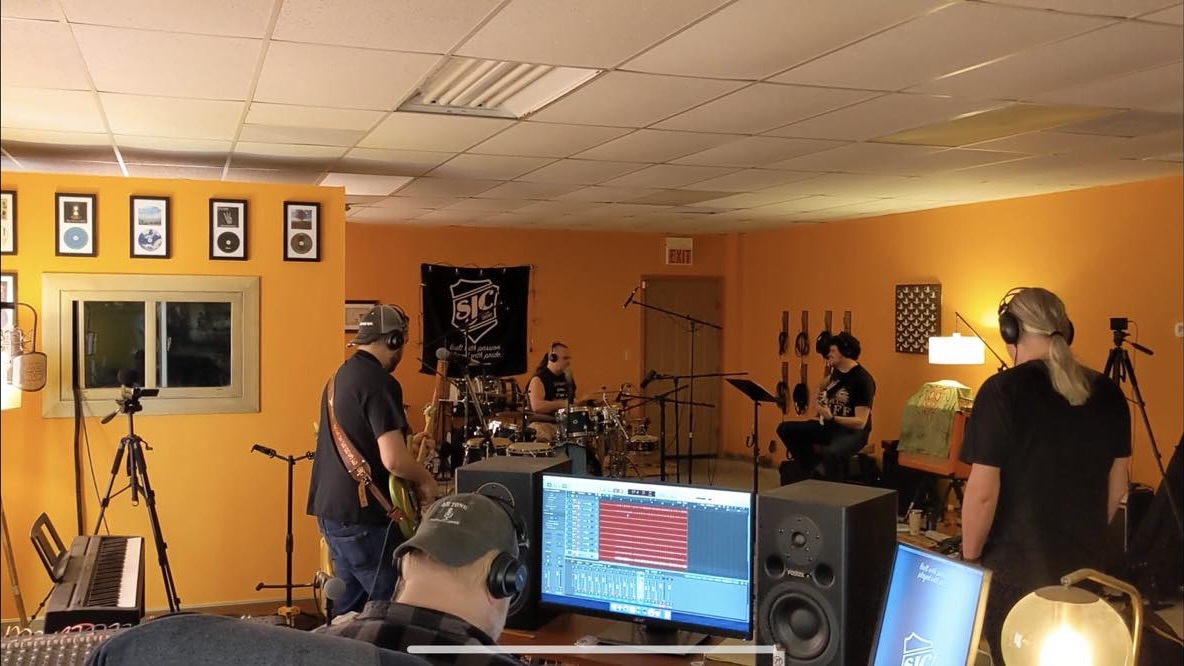
Korre: So, take me into this studio. First, which studio are you at? Who’s in the room with you? Describe it for me.
John: Yeah, sure. Ace Tone Productions is the name of it, and the sound engineer is Matt Terribile. His big thing — he didn’t have a studio for a long time. I met him through a local Grateful Dead cover band, Shakedown. Their guitar player was in the midst of trying to record his own solo album.
Matt’s big thing was mobile recording. He could come to your garage and make it sound like a studio. He could come to your basement and try to make it sound like a studio. That was his thing. And I was like, “That’s cool, but I don’t really want to do that.” Six months later, he hits me up and he’s like, “I’ve got a place now. You want to come actually record?” And I was like, “OK.”
So, you walk in and it’s awesome. There’s this giant green-room type of area where there are couches and he’s got this old vintage stereo system. That’s always my favorite part — when the album is done, you sit on the couch, and he plays your record through his old vintage stereo, so you get to just hear it in all its glory. It’s got the dynamic speakers, so you got to sit in a certain area to get the best sound — my favorite.
The walls are like burnt orange. I’ll have to send you a picture. It’s so unique. First of all, I never been in a room I think that has colors like that. Honestly, it adds to the energy. It adds to the energy of the room. It’s bright, and it kind of fires you up a little bit.
The recording area itself is very big. The drums are kind of in the corner. There’s a bass rig over to the right, and then the guitar rig is over to the left. And he has got a nice vocal booth, too. He’s upgraded tremendously since I met him, but it’s such a great room. It really is.
Korre: So, when you’re recording a song, are you more often playing together at the same time or recording your parts individually and then layering each band member’s part over it? Or does it depend? How does that work?
John: In the beginning we did it all separately — and we hated it. I hated it so much. The bass and drums got to record together, and then I was off to the side like the wicked stepchild. I got to record afterwards. I was like, “Hey, over here. My name’s on this. What’s going on here?”
But I quickly realized that, with jam bands and rock music, the energy of playing off each other is unmatched. You’ve got to be together. So now it is always together. We track guitar, bass, and drums first to get the raw kind of thing. I mime the vocals, or we have like a scratch vocal track where it is not our actual vocals, but just for cues — those kinds of purposes.
You know, it’s really funny. Scott sent me a recording. You just hear me go “Chorus. All right, here we go. Verse. All right. Bridge. Chorus.” And I was like, “Please delete that like, immediately.”
But always together because, like I said, you get a better take out of it. And I don’t think I would do it any other way at this point.
Korre: Do you think some ideas are going to work in the studio, but after just trying and trying, you just set them aside and move on? How does that work as a creative person in the studio?
John: And the opposite, too. We have one song, it’s called Prepare For Liftoff, and I think the album is going to end up being called that as well. It’s a funk tune, but it was just kind of like going the entire time through. Our drummer, I think he just went to go to the gas station across the street to get snacks, and the bass player and I were just kind of messing around. I literally on the spot created a slow-down section in the middle of the song that we referred to as “the orbit.” Prepare For Liftoff, so you’re like in space and all that.
Our drummer came back in, and he was like, “This does not sound like the song that it was when I left.” That was something that we created on the spot in 30 seconds.
So, sometimes, spontaneous things will come to you. Sometimes, like I said, they don’t work. I had, in a couple of other songs, a solo that I must have done like seven takes on. I was just getting so incredibly frustrated. Scott just leans forward and he goes, “Dude, we got like six good takes. I can Frankenstein stuff. You’re stressing yourself out over absolutely nothing.”
And I was like, “All right.” So, then the next day, he goes, “Just for fun, with no worries at all, with no pressure at all, not to get it, not to do anything …” That’s the one we ended up using. Things like that, it works.
Korre: Did I see something in the credits of Mystery Man that Scott played keys on the album? When I saw that, I was a little surprised. I didn’t know he was a keyboard player, but in addition to being a producer, did he play instruments on some of the songs?
John: Yeah. He played. So, he ended up actually mixing the album as well. I don’t think that was his intention to begin with. It was funny. We got the mixes. The sound engineer was a mix. And then he was like, “Let me do a mix just for the hell of it.” I was like, “OK.” He did one, and I was like, “Dude, your mix is really good.” And he’s like, “No, you’re just saying that.” I was like, “Why don’t you try mixing another song, and another song?” And before I know it, he’s just mixing the entire album.
I went over to his house — he’s about an hour and a half, two hours away from me, not far at all — like multiple weekends, and we’d go up there and just experiment with sounds. He’s got in his basement a great little kind of mini-studio setup. He’s got like a little MIDI keyboard in front of him. He would add little things on top of that and just sing right there, harmonies and those kinds of things, on the spot. It was really cool to watch. It was.
Also, I can’t believe I didn’t shout him out, one of the biggest, biggest (did I say biggest?) supporters is my best friend, Will Jakubiak. He’s been there since the beginning. We refer to him as our road manager because he just shows up to every gig and hauls stuff across state lines for us. He’s awesome. He was there almost the entire time while we were recording, too, and was just a huge part of the energy.
I can’t stress enough that the energy of the room is of the most importance. Because if somebody’s annoyed, if somebody’s pissed off or just having a bad day, it’s gonna come out in the music. You could fake your smile through it the entire time or you could be as tight a musician as you are, but it’s gonna feel off just a little bit when you listen to it. It’s hard for me to explain, but that is probably the most important thing.
We made sure while we were recording that we were all in the best of mindsets, I guess I would say, while we were doing it. We wanted to make sure that again, we would get the best product out of it, too.
We also encouraged everybody who came in, all of our session musicians — we had Mark Mercier come in, Mike Bafundo, John Mundy from West End Blend, Sammi Garett, all of them — to just fill the space as much as possible. What I mean by that was, Mark made a joke, and I have it on video. He’s like, “Watch out, I’ll take every fill if you let me.” I was like, “No.” Scott was like, “No, I want you to. We’re gonna pick and choose, and we’re gonna pull stuff in, pull stuff out, too.”
In the past, we had just been like, “No. You only play at 46 seconds until 1 minute.” Now, that is not the case at all. We had almost too much stuff, but it was good because anytime we were like, “This is getting monotonous. It’s just going. We got to fill this space somehow.” We have so much stuff to fill. “Oh, there’s a keys fill right here. Oh, there’s a horn fill right here. Oh, the singer did something really cool here.” So, that was again, a new change, a welcome change, something that we had never done in the past.
Korre: As somebody who has created an album, seven albums now, what is this for you? Is this like your little baby, your special thing? What is your relationship now with this piece of work that you’ve created?
John: I mean, I think every person, artist, musician, anything is always trying to top their last, right? And I’m sure it sounds cliché when you’re like, “This is my absolute best,” but it really is because I just feel like I’ve grown so much even since the time that I started talking to you in 2019. So much has changed professionally and personally since then.
I’ve always been, this might be hard to believe, but I’ve always been a little reserved and a little shy with approaching people and those kinds of things. It’s just something that even to this day, I worry a lot about how I’m going to be perceived and those kinds of things. I’m a high-energy dude, I understand that, I get it.
For me, being able to tap into my network of friends and being like, “Hey man, this song really means a lot to me and your playing, I think, would serve the song very well. And you being a part of this would really mean a lot to me, too.” That’s honestly how I approach it.
I would have probably never done that in the past. Probably out of fear of being like, “Who’s this guy? I don’t want to play on his stuff,” but I was like, “I don’t care at this point.” The reason being, because I believe the song deserves it. And I don’t want to toot my own horn, but I believe that the songs are good enough to have some of these people on them. I think Mark Mercier is such an incredible keyboard player. First of all, it’s an honor of mine to have his playing on an official thing.
That’s another thing, too. Our keyboard player, since we last talked, unfortunately, he passed away in like, 2022. But I have 247 recordings of his playing on Archive. I could just go listen to it at any point. That’s a beautiful thing. So, it’s like creating a legacy in the sense of, I’ve got these great and extremely talented — and who can run circles around me —musician friends that can play incredible music. Why would I not take advantage of it at this point, you know?
Korre: Is there a song on this album that’s special to you? And if so, why?
John: Mystery Man probably is one of the most important ones. In 2018, my wife and I were leaving a Dead & Company show in Hartford. We were walking down the street, and we were going to an after-party happening at this bar, Black-Eyed Sally’s, about maybe a block or two away. I noticed as we’re walking down the street that everybody’s kind of veering off the sidewalk and going into the street and then getting back on the sidewalk. I was like, “This is really weird. What’s going on?”
We get over, and I see this guy’s laying face down. I was like, “Oh, Deadhead, he’s partying,” whatever, whatever. I get a little closer, and I see that he overdosed. That kind of stuff hits a chord. It unfortunately is what made our keyboard player pass away, too, so it holds a special place in my heart. I feel drawn to help people of those kind of things. So, I ran down the street. I got the cops, they came over, they shot him up with Narcan and they got him on his feet. They took him away. I never learned his name. That’s why I named the song The Mystery Man.
But to this day, more than anything, it just pisses me off how many people just walked by him and didn’t say anything. I can’t get down with stuff like that. It doesn’t cost anything to just be a decent human being. I mean they’re all important songs. That one definitely holds sentimental value.
Blank Canvas, that was the first song. That one’s all about starting over, which I feel like we are with this one. Like I said, tapping into the network and the community and those kinds of things, too.
Korre: For a listener who may not be familiar with your music and who’s maybe listening to this podcast or checking out some of these new songs, what do you want fans of yours to know about you from this album. Is there a message you want them to take away or a feeling?
John: It’s OK to not have all the answers. I think that’s probably the most important thing. I’m guilty of that myself in terms of always wanting to say the right thing or do the right thing or be that person for somebody else. But like, we’re all human and imperfection is OK. That’s something I’m coming to terms with, too.
Working with all of these wonderful people and teaching, too. I’m a middle school teacher and that’s something I’m trying to teach the kids, too. It’s OK not to have all the answers. If anything, you take away from this kind of music, I hope that’s something that’s like, “Hey, man, there’s other people out there that just don’t get it either. And that’s OK.”
Korre: Do your students know that you’re a performing musician?
John: Oh, they do. They found me on YouTube. Over the summer, we played our local town festival in Branford, Connecticut. It was like the coup de grâce. I wanted to play this my entire life. They usually get like Aerosmith cover bands. This year, the headliner was a Bon Jovi tribute band called Don Jovi. They were great. They were awesome. I also realized how not well-versed I am in the Bon Jovi catalog, but that’s beside the point.
So, we opened up for them, and all of my students came. There were so many of them. They were sitting on the grass in front of us, just screaming in between every song. My throat would be killing me if I screamed like that, but they’re 12.
Korre: Another thing I noticed since we last talked is you’ve had plenty more opportunities to play with members of Max Creek in a variety of settings. Can you tell me some of your more special opportunities to sit in or play with members of Max Creek? Give me some idea of what that’s like for you.
John: They’re a band in 54 years in, and to be able to play a small part in that is a huge honor, too. One of the highlights probably was the beginning of this year, in January. JSB was opening for Bearly Dead. I don’t know if you’re familiar with them. They’re a Grateful Dead cover band.
Very unique, there’s no distinguished Jerry, and all that. They just kind of take the tunes and run with them. We got to open for them. My drummer, Matt, I think he got COVID or something and couldn’t make it. Alright, I called my friend Chris Andrews, who plays in the band Something Is Forming. He goes, “Yeah, I’ll do it.” A week later, he’s like, “I got COVID, too.” I’m like, “Oh my God.”
So now I’m thinking it’s gonna be me and Joe, and me and Joe have done the duo thing. I was like, “But that’s not really the energy.” We’re opening for Bearly Dead at a nice little theater. It’s a giant stage. It’s not going to be the right vibe. Then I’m looking, and I asked Bill Carbone. This is a long shot. I go, “Billy, you want to play?” He goes, “What’s the date?” I tell him the date. He goes, “With Bearly Dead?” I go, “Yeah.” He goes, “I’m playing with Bearly Dead that night.” He was already on the gig. I was like, “Oh my God.” I said, “Well, do you want to do double duty?” He goes, “Yeah, sure. Why not?”
So then maybe a week or so leading up to it. I text Scott, I go, “Bill’s playing with me.” He goes, “Where?” I go, “Bearly Dead.” He goes, “Oh, I’m playing with them, too.” I go, “You want to play with us, too?” He goes, “Yeah, sure.” So, he came up and played the majority of the set with us, too.
It’s just so funny. I always joke that it’s one big band, especially in our state. I mean, Connecticut’s not that big to begin with, but it’s just one big band. Everybody knows everybody, too. That was incredibly awesome.
Korre: John, for fans who want to learn more about your band, the John Spignesi Band, where can they find you online, or where can they find your band performing?
John: Everything is on JSBmusic.net. That’s the website where all the tour dates are and all of our merch and everything else and videos that link to YouTube. I try to upload at least one highlight from every single show, a song that we feel best encapsulates the performance and that kind of stuff, too. But if you go right to our website JSBmusic.net, you’ll see that we have quite an array of dates coming up. It winds down a little bit in the fall, but then we ramp up again in the spring and the summer. We’re all teachers, so once school gets out, we kind of just go.
Korre: John, you clearly have a passion for music. I’m curious, why is music such a big part of your life?
John: For me, I always wanted to feel connected to people. I’m a big people person. I like my alone time. There’s a bit of a lone wolf in me. But I also really need people because they help me grow and those kind of things. So, music for me was a way of connecting with people and being able to share art with people and being able to have their art shared with me.
I almost feel like when you listen to music or when you play music, you’re tapping into a different part of your brain that maybe you wouldn’t necessarily say vocally or those kinds of things. There’s a different person in you that kind of comes out, too. For me, that’s super important and something I always want to continue to have, I guess.
Korre: John Spignesi, thank you so much for joining me on Hooked on Creek. It’s just been so much fun talking with you.
John: Korre, thanks for having me. Again, I appreciate all you’re doing for this podcast, and I hope you’ll make your way out again and come see Max Creek again soon for sure.
Korre: I will, and I’m excited to see the John Spignesi Band. It’ll be fun.
John: Maybe it’ll be a double bill. Then it’ll be like a two-for-one special.
Korre: Yeah, definitely.
John: Thanks, man.
[interview ends]
Thanks so much to John Spignesi for taking the time to join me on the podcast. It was a lot of fun reconnecting with John and hearing all about his band’s new album, the recording process, and his relationship with Scott Murawski. If you are curious, this episode featured clips of the following songs performed live by the John Spignesi Band:
- Feelin’ Free performed at Hoops N’ Hops in Simsbury, Connecticut, on November 16, 2024, with special guest Scott Murawski.
- Blank Canvas performed at Newburyport Brewing Company in Newburyport, Massachusetts, on May 3, 2025.
- Tough Guy performed at The Juke in Deep River, Connecticut, on April 11, 2025.
- Prepare For Liftoff performed at Stony Creek Brewery in Branford, Connecticut, on February 22, 2025.
- Mystery Man performed at Black-Eyed Sally’s in Hartford, Connecticut, on June 28, 2025 with special guest Mark Mercier.
You can find links to stream or download all of those live performances in the show notes. So, that wraps up episode 63 of Hooked on Creek. If you have feedback about this episode or suggestions for future episodes, please visit hookedoncreek.com and click the contact link to send me a message. I would love to hear from you. Thanks for tuning in!