
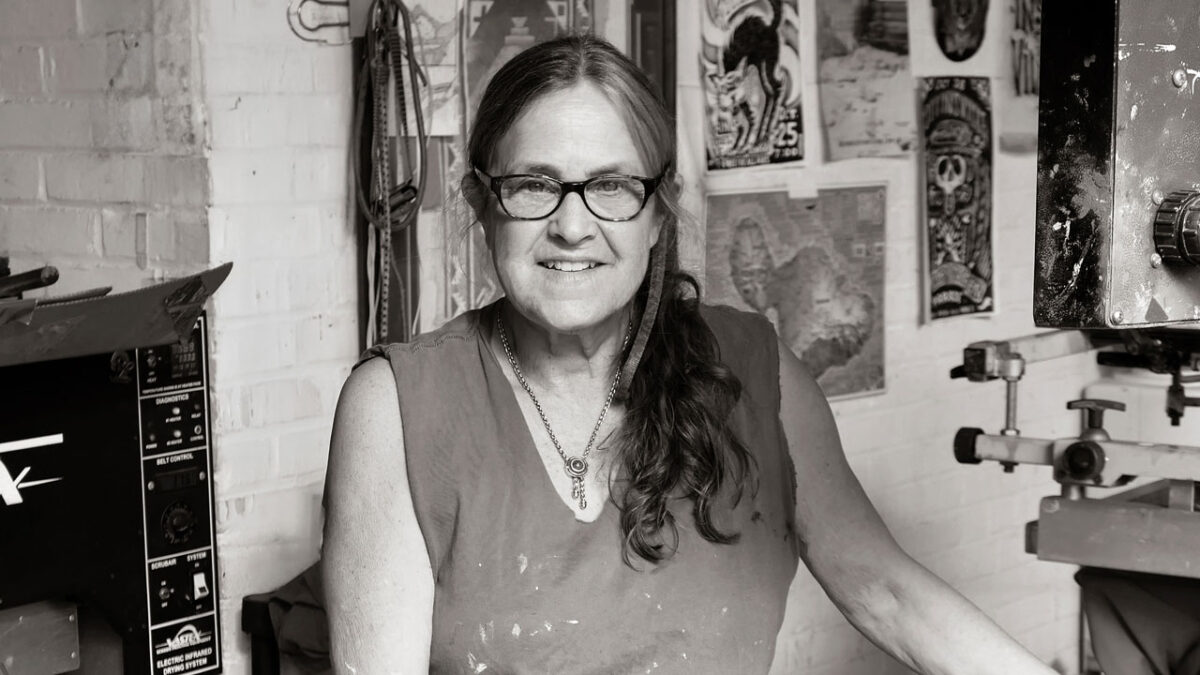
Episode 69 features my conversation with Linda Cournoyer — longtime lighting director, album cover artist, and merchandise designer for Max Creek.
Linda’s connection to Max Creek spans more than five decades, starting in the mid-1970s when she met the band and began building custom lighting rigs for their early club gigs. In this episode, Linda discusses her role directing the lighting for Max Creek’s live shows and how her paintings and creativity have shaped the band’s iconic album covers and merchandise designs.
Linda also shares her memories of pitching demo tapes in New York City, writing fan-favorite songs like LFS and Orange Sunshine, printing band merch, and raising a family alongside the band.
This episode also features clips of the following songs performed live by Max Creek:
- Orange Sunshine performed at the Paradise Rock Club in Boston, Massachusetts, on January 27, 2000
- LFS performed at the Agora Ballroom in West Hartford, Connecticut, on February 26, 1987
Transcript of episode 69
You’re listening to Hooked on Creek, a podcast celebrating the music, history, and fans of the legendary jam band Max Creek. I am your host, Korre Johnson, and this is episode 69.
Welcome back to Hooked on Creek! I have another very special episode lined up for you today, so thank you for joining me. Every great live show is the sum of a lot of unseen work — the lights, the artwork, the merch on the table — and few people have shaped that side of Max Creek more than the person joining me today.
In this episode, I’m joined by Linda Cournoyer. Linda’s connection to Max Creek goes all the way back to the mid-1970s when she began building custom lighting rigs for the band’s early club gigs. Over the decades, her artistic talents also went on to shape every aspect of the band’s visual identity, from designing iconic album covers to running merch operations and even writing fan-favorite songs like LFS and Orange Sunshine.
In our conversation, Linda talks about how she first crossed paths with the band as a teenager in Connecticut, what it was like learning the technical side of lighting from scratch, and how her painting and design work found its way onto the band’s albums. Linda also talks about pitching demo tapes to record labels in New York, raising a family alongside the band, and what it means to look back at over 50 years of community and music with Max Creek.
I had a great time talking with Linda, and I think you’re really going to enjoy hearing from someone whose creativity has helped shape the Max Creek experience for generations of Creek Freaks. Alright, now let’s get started.
[interview begins]
Korre: Linda Cournoyer, welcome to Hooked on Creek!
Linda: Well, thanks for having me!
Korre: I’d love to know, Linda, how did you first get exposed to Max Creek? Take me back to that time and place.
Linda: My story is I always loved music, and I went to school with a whole bunch of musicians. One of them, his name was Kenny Caddick, was always the high school kid that had a band.
You know, we all graduated high school, and I still stayed a little in touch with Kenny. He said, “Why don’t you come check out this band, Max Creek?” He supplied all the audio equipment at the time. John Archer was running the sound, but Kenny supplied the speakers, and he was the audio technician who was always investigating new cool things and presenting them to the band. This was in probably — I’m going to guess — 1975.
So, I knew Kenny from high school, and I remember seeing the band with my friend at the Pentangle Pub in Avon. They used to play there. I really liked them, I thought they were fun, so me and my friend, Lisa, went and checked them out.
I did all kinds of things locally in the Simsbury area. At one point, I used to hike up Heublein Mountain, and there was a bunch of hang gliders that had come into town from California. Now, I was 17 or 18 years old, and they were older and really cool. So like, “Oh my god, guys from California are going to come jump off this cliff!”
Long and short, we were talking, and it was the first time I ever heard about Acapulco Gold pot. We just got chatting, and they said, “Hey, we’re going to head over to this party at Phil McKissick’s house.” Well, it turns out Kenny Caddick was friends with Phil McKissick. He was having a party, and Max Creek was there because Kenny invited them. I was invited by the hang gliders, and I kind of remembered them, so I thought, “Oh cool, the band will be there, I’ll meet them.”
I met Scott [Murawski], and I continued to see the band locally. Met John Archer, stayed with Kenny, and kind of became friends. Went to all the early shows, and that’s how it started for me. I was just around. I was in college, I was in school in Boston, and that’s pretty much the very, very, very early days for me. I was an artist and a designer, and they were cool. Music and art, I just got very attached to the whole cool scene that I was a part of.
Korre: As a teenager in high school, you’re exposed to this music of Max Creek. What type of other music were you listening to at the time? Was this the type of music you were listening to, or was this different?
Linda: I always loved the Rolling Stones, the Beatles. I loved so much music. I didn’t really get into the Grateful Dead until a little bit later. I loved all the music of the times, really. I loved their music, but they were a little bit more on the country side back then. I wouldn’t call it country music of today, but it was different than it is now, and it more evolved into the jam band sort of genre a little bit later on. But I always loved music, any kind of music, and that was the attraction for me.
Korre: It sounds like as a teenager you were already interested in art and design, so maybe music sort of fell in line with some of those interests?
Linda: It did.
Korre: And Max Creek as an expression of art and creativity — was that part of what drew you in?
Linda: It is. As I got to know everybody more, just from being around — because it was a very small scene back then. It was a small, small little club in Avon, Connecticut, that I don’t even know how many people were there: 50, 75, small amount of people. So, you’d see the same people every week.
I remember saying, “Wow, it would be really cool if you had lights.” And that’s where it all started.
It was a club that didn’t have lights. Nobody had lights. It was a completely different time. It’s so hard to equate how things were in 1975, 1976 to now. It really was so very, very different. There wasn’t production for lighting readily available. It was mostly in theaters. Clubs — unless it was a huge club — didn’t have any lighting, so bands were just going in and play. So, it just wasn’t available on a small scale.
Korre: So how did you then gain the familiarity with the technical side of lighting — the electrical side and the set up of lighting? Is that something you just figured out on your own, or was somebody in the band working with you on that?
Linda: So John Rider, the bass player, he loves tinkering around with electronics. He’s very gifted in doing so.
We had this idea: well, why don’t we build lights? So, John was teaching school at the time, and he had a metal shop. He rolled out the aluminum and made lights in the metal shop and went and bought a floodlight from the local Walmart — but it was before Walmart—and built lights.
From there, he also built a dimmer pack so we could control the lights. So, we got the lights to go up and down and dim, we gelled them so we had color, we plugged it all in. The first night I think we had a full system of 12 lights was at Mad Murphy’s in Hartford. I don’t remember what year that was.
So that system just evolved literally from scratch. The funny part about it was we needed a way to hang the lights above the band. So, we got steel pipe. We used to carry steel pipe and pipe wrenches to the gig, set them up. It was heavy, it was steel! And then it would take like eight guys after we put the lights on them to take this structure and lift it, so it was a lighting truss.
Korre: It sounds like a lot of work, but was it fun, too?
Linda: It was fun because we were creating. It was exciting to build it, it was exciting to have it. It was more work than it was really worth. I think that’s pretty much going to always be the story with me. Lighting has just been so much work. Now, with all the lights and the LEDs, everything is light, everything is cheap, everything has a dimmer pack, everything can change color. Back then, it was just hard. It was just a lot of hard work for what seemed like a much bigger gain back then than it actually was.
Korre: In my interview with Greg DeGuglielmo, he mentioned his first impression of you was seeing you hanging upside down, cursing out a lighting fixture to get it in place. I laughed when he said that then. Is that kind of what it was like? Every club is just a challenge to get this rig up and running?
Linda: Oh, it was! It was hard just because we made everything. It was heavy, everything was heavy back then. Nothing was light, everything was steel. All of it was hard. It just was hard.
As the band evolved and clubs added a little bit of lighting, as things progressed, I would go in and there would be a system there in varying degrees of operating well. So, I spent a lot of my time cursing, and fixing, and trying to do the best job I could with what I had, which, looking back, it wasn’t much. But we had lights, we had sound, and not everybody had that back then. It’s hard to believe, but the bigger rooms like the Agora, once in the ’80s once we got into those rooms, they had better lighting rigs, nice lighting rigs. Then it started to get fun.
Korre: As a lighting director, how did you approach the jamming with the band while they were on stage in real time? How are you synchronizing the lighting with those musical transitions on stage?
Linda: What I try and do is have the color match the mood, just create mood more in a theatrical way. Having the color on stage feel like the song.
It’s hard to describe, but I really would just get in the zone just like they would. You’re actually not super conscious of what you’re doing. You’re not sitting there going, “OK, well, it’s coming up, I’m going to make this red, and then the next song I’m going to make green.” It’s just like, this is what it feels like. It should be in the moment, at the time, and you’re building along with the music as the music crescendoes. The lights get brighter, and just literally flow with the music.
So, you’re really on a different plane. You’re not really aware. I got to the point where it just flowed for me. It just went through my hands. I looked at the stage, I could read them. After doing lighting for them for so many years, I just knew where everything was going to go. That’s when it got fun, when there was actually a decent system to work with.
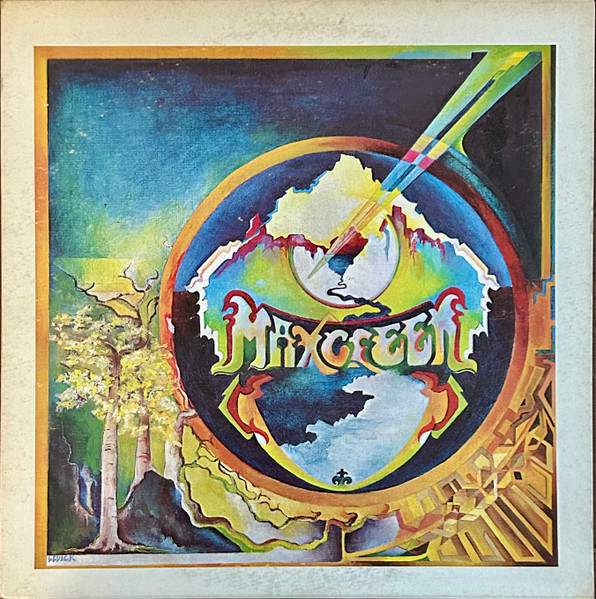
Korre: At some point in time here, your interest and your expertise in visual design crossed over into the artwork that inspired and ultimately came on some of these Max Creek albums. Talk to me about how that first started, because if my understanding is correct, your artwork is on many Max Creek albums going back to the debut album in 1977. Is that correct?
Linda: That is correct. It is, I’ve done every album that they’ve done. I mean, there may be some side projects or something that I didn’t do the graphics for. The only cover that I didn’t do the front of was the Rainbow album, but I did the back.
My primary love was to paint and design, and that’s where I started. Everything was oil paints, and I just painted away and started doing the album covers. Again, I was there and I filled a need at the time. It’s like, “OK, well, I’ll do that.” That was before computers. By the time computers came along, then I started to design in Photoshop and design digitally.
Korre: Do you remember when that first album came out, what was the excitement in the band? What were the expectations, and what was the general mood like back then?
Linda: It was just light and fun. Everybody was young.
I remember when I first met the band, I was 19. Scott and I are the same age. We just turned 70 — Scott’s not quite 70 yet — but they were 26, so they were way more mature. I just remember kind of being timid because they were older and more mature, and they got this album coming out and I painted it. It was exciting.
Everybody was so into the technical expertise and getting into the studio and spending time with other audio engineers. Ronnie Scalise did our first album, I believe, at The Nineteen Recording Studio. So, they were always perfectionists about the sound, and everybody really got into it. It was really fun and exciting. It took forever, because you used to have to get the album mastered and send it off to somebody who did all the mastering in Florida, and then you had to wait what seemed like forever to get the vinyl back. It was quite a process, and it was exciting.
Korre: I would imagine for somebody like yourself, to have your artwork featured on a band’s album, it must have been a lot of pride in that. Is that right?
Linda: Yeah. It’s like anything else, it’s hard to look back at something you did when you were 20 and go, “Oh my god!”
Korre: Would you do it over? Is that what you’re saying?
Linda: Whenever people say, “Oh, can you use that old design?” It’s like, “No, I don’t want to use the old design, I want to do a new design!” Because you see your growth, you know? That was old, and I did it all in pen and oil paint. I don’t know. I guess I’m proud of it, but I look at it now and it’s like looking at kid art, you know?
Korre: Of all the albums that you have supported, do you have a favorite then? Maybe I could phrase the question that way.
Linda: I think the one that was my favorite was Dring the Stars, because we did it as a box set. So, it was really fun to put together, and it was different. We had a poster on the inside. It seemed like it was a much more in-depth project. That was my favorite.
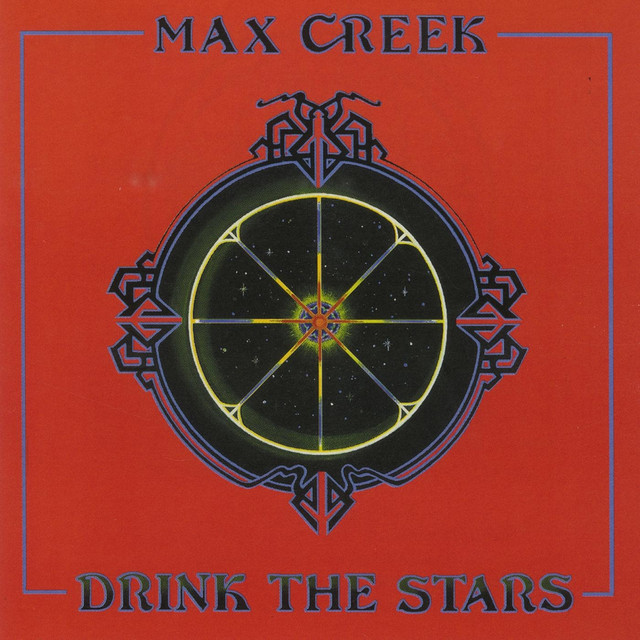
Korre: On that album Drink the Stars, I noticed that you are credited as both the cover artist and a co-producer with John Rider. Can you share how your role expanded into getting a producer credit on the album?
Linda: Probably just because of the graphic. I didn’t have any other responsibility musically or anything.
A lot of this, when I think about it, we didn’t have phones, we didn’t have Google. So, what you think a co-producer is, you can say, “Well, I’m going to Google it and see what this actually means,” you know? Because I didn’t co-produce it, but we probably did put that on there that I did. But we thought of it as a box set. We said, “OK, we’re going to do a poster, and then we’re going to put a sticker in it, we’re going to do this, we’re going to do that.” So we worked on it together, John and I. And then the band of course did their part with it. I did a lot of the legwork on the labels and things like that, so I really just produced it from the visual part of it.
Korre: As the band was touring more in the 1980s and releasing more albums, how did your relationship with the band change or evolve, or what types of things were you doing to support the band maybe in addition to the lights or in addition to the art for the albums?
Linda: There was a period of time where I was spending a lot of time in New York City, and it was when the jam band thing started to come to fruition and people were touring. Smaller bands were touring — it wasn’t just like the Rolling Stones are going on the road. So, they started doing the big festivals, and I was in New York and I said, “You know, I’m going to see if we can get these guys a record deal.”
So, I did my research and I presented our press kit, took our demo tape to lots of the different record labels in New York City. You could drop them off in the office wherever they were, so I literally went there and physically handed our press kit — or promo kit, we used to call them back then — to the person at the front desk, and really tried to get a record deal. So, I have quite a large pile of rejection letters.
Korre: What type of response did you get when you made those outreaches to some of these record labels?
Linda: It was just kind of not interested at the time. You know, it didn’t fit into the three-minute radio airplay. Again, we have to look back to the point in time that it was. Songs fit into the format of the radio or what was happening at the time. They had a lot of great, great material, and we just never really got a break.
We had tons of talent, and there’s certainly plenty of other bands out there that maybe had better connections, maybe more money to support different ventures or keep them in the studio or do distribution or publicity bigger and better. We were a working band. So, everything that we wanted to get, we had to pay for. There wasn’t somebody promoting. That was an interesting time.
Korre: Tell me about the song LFS, which I understand is a direct acronym to Linda’s First Song.
Linda: Yeah, I was in my yard raking leaves, and lyrics started coming into my head. I’m like, “OK, that’s interesting. I should go get a piece of paper.”
Literally, went in, got a piece of paper, wrote down the lyrics, put down the piece of paper with a rock on top so it didn’t blow away, raked more leaves. More lyrics would come through.
I have really no magical answer for that. It happened, it came through, and of course the band made it great. I could play baby chords on a guitar, so I could strum a basic rhythm — the feeling of what I wanted the song to very generally feel like.
And it was the same thing with Orange Sunshine. That song was written when I was in New York, right on 2nd and 6th Street in Manhattan on a stoop. I played the baby chords, and I had a whole idea on the song and the structure of the song very fundamentally. And then I took it back to Scott, and he made it great.
Korre: What is it like for you to hear those songs now, this many years later? Because they’ve gone through probably different flavors and different drummers and sort of different feelings over the years. What’s it like for you to hear them now?
Linda: It’s also interesting because some of the songs have different emotional attachments. Some of the songs, I know what they’re about, I know who they were written for or about, and it’s interesting how sometimes I’ll remember it, and sometimes it’s just a song.
It’s kind of like anything else. Some days things bring you back and bring lots of memories back, and other days it’s just a song and you don’t think about the meaning of it.
Korre: Help me understand who were the people that were supporting Max Creek in like the ’80s or early ’90s as the band was touring more and maybe having an eye on potentially breaking through like other bands did in the early ’90s. What was the crew like? Who were the people that were supporting the people up on stage?
Linda: We had a road crew for about 10 years when we were working five days a week. That was in the ’80s. We worked Wednesday through Saturday, so we had a truck and a crew to haul all the stuff in, set it up, take it down. Always had a monitor engineer, always had a front-of-house sound guy, and I did the lighting.
Korre: Was it challenging for you? This is a heavily male-dominated industry for you to find your space.
Linda: Absolutely. It was always challenging.
I think when I finally got out of the business — I still run lights every now and then, and I still love going to see shows — I realized how hard it was once I got out, because there’s so many women I’m surrounded by now! “Oh my god, what is this life?”
I had a mentor, his name was Woody, and he used to work at Woolsey Hall in New Haven, right by Yale, and they got all kinds of artists through there. I bought a bunch of PAR cans from him, and they were on the road with The Temptations, so that was pretty cool. But he mentored me, and he said, “Listen, this is going to be tough. You’re just going to have to stay strong and don’t ever let them see you sweat.”
It was challenging because I would go in and I would get, “Oh, there’s the lighting girl who broke the lighting system,” when in reality, I fixed it! I would change gels, and it’s like, “Oh, this lighting girl, she stole the gels.” Just, it was challenging, for sure. I had to have a really tough skin, and sometimes I wasn’t so tough. There were times where it was hard.
I guess the other thing is too, we were working five nights a week. I had to leave to get to a gig by 3 in the afternoon to do the lights, to load in, hang the lights, and if there was programming or gelling or whatever it is that had to be done for the band to go on at 10 at night. And then they played until 1:30 and then had to take everything down and then drive home. So, it was incredibly long hours, so it was hard.
Korre: Throughout this time supporting the band, what were you doing in the other part of your life to support yourself? I understand you have a t-shirt company, is that right?
Linda: Yes. Right from the very beginning when we were creating the lighting, we built a small press literally from a screen and a couple of hinges — very fundamental — and printed the first Rainbow shirt. Obviously, it was around the time Rainbow came out, because it was the same design. That was the beginning of, “Oh, maybe I should print shirts!”
Just like anything else, started small, got a manual press, and then it became my day job. So, I now have an automatic press, and embroidery machines, and I make all the merch — most of it at this point, some other people are doing stuff now — but I’ve made the merch the whole time, printed it in my shop. I have a business here in Canton, and it’s completely separate from the band. I do the fire department and lots of local businesses. For many, many, many years, I did the Wormtown Music Festival, I did the designs for them and all of our festivals.
So, I really love being able to create a design and put it on the press and turn it into a shirt. It’s been really fun to do that. I’ve enjoyed that a lot.
Korre: You were talking about creating merch for the band probably over a real long time. Did you pitch the band saying, “I got three ideas, which do you like?” Or how does that process work?
Linda: No, I just did what I wanted. Basically, I did all the branding and set up the online store when we had it. So that was just my job, right? So, I did it. OK, we have a design in the spring, and then we’re going to have a design in the fall. It was up to me. If it’s winter, we’re going to make some hats. I had free rein to do whatever I wanted to do, which was really great. It benefited them, too. It was very creative, and I’ve enjoyed doing it.
Korre: So Linda, you’re 70 years old, and it sounds like you first got exposed and met the band when you were a teenager. That’s most of your life, right?
Linda: It is. It is most of my life.
Korre: When you think back on that, what are some of the memories that stand out as like the highlights of that entire experience you’ve had so far?
Linda: It used to be really fun to do the Agora Ballroom shows because we were there for two nights. We could set up and leave it and come back the next day and do another show, so it was easier on the body.
What was really fun is when we all had our kids at about the same time. They used to be really cute. They’d come to outdoor shows and run up and down the ramp and play together and grew up together. It was family and it was fun. I miss that. Makes me happy to think back to all the good times that we had. We used to go out to eat after shows.
Actually, my son was born at Camp Creek. I should mention that! Yeah, he was about a week early, and I was doing lighting, and my water broke. I had to get immediately transported to the hospital. I had my dog with me, so my dog went too! So, my friend had to come along and take the dog home, and my son Jason was born. So that was a big, big moment.
Some of the other fun things, when we used to do Gathering of the Vibes, the kids would all play backstage. They all were riding on their bikes backstage, and they were probably 8, or 9, or 10. The boys had turned on the soft-serve ice cream machine and left it on! So the ice cream kept running backstage, and yeah, it made quite a mess.
And my son, I remember he got a meal out of Phil Lesh’s catering when we were working with Phil Lesh backstage. He comes back out and he goes, “Oh, that dinner was really good.” I said, “Where’d you get dinner?” He goes, “Over there. That man, Phil Lesh.” So, it was fun with the kids, and it was fun when we were younger, because it didn’t hurt so much to not get sleep. That was one of the main reasons I stopped doing lighting, is I just couldn’t run a business anymore and get home at 3 in the morning.
Korre: Do you see yourself as part of this band that is so important to so many people? Because I do, and I think other fans do. How do you see it?
Linda: Well, I definitely do, because I feel like they’re my lifelong friends, more so than anything else. 100% a part of my DNA. Could never imagine not hearing their music. So it is 100% a part, a huge part, of most of my life, really.
What I think is really cool is we’re still here, and we’re still together and still see each other. We all started as kids, and watched our kids grow up. Now people have grandkids! Scott’s got a grandkid. It’s so cool. I remember I used to say to Scott, “I wonder what it’s going to be like when we’re like 70. What do you think?” Now I look at him, I go, “Well, we’re 70.” Well, he’s not yet. He’s not 70 yet, but so it’s just a really cool thing, and it’s been sustaining for a job. Everybody has the band, and do their other job, but it’s always been there. Yeah, I can’t imagine my life without them.
Korre: Linda Cournoyer, thank you so much for joining me on the Hooked on Creek podcast. I had a lot of fun talking with you.
Linda: Yes, and thank you so much for having me. I really appreciate it.
[interview ends]
Thanks again to Linda Cournoyer for joining me on the podcast. It was really cool learning all the different ways she has contributed to the band and the Max Creek community over the years.
If you are curious, this episode featured clips of Max Creek performing their song Orange Sunshine live at the Paradise Rock Club in Boston, Massachusetts, on January 27, 2000. I also played clips of Max Creek performing their song LFS live at the Agora Ballroom in West Hartford, Connecticut, from all the way back on February 26, 1987.
That concludes episode 69 of Hooked on Creek. If you have feedback about this episode, please visit hookedoncreek.com and click the contact link to send me a message. I would love to hear from you. Thanks for tuning in!