
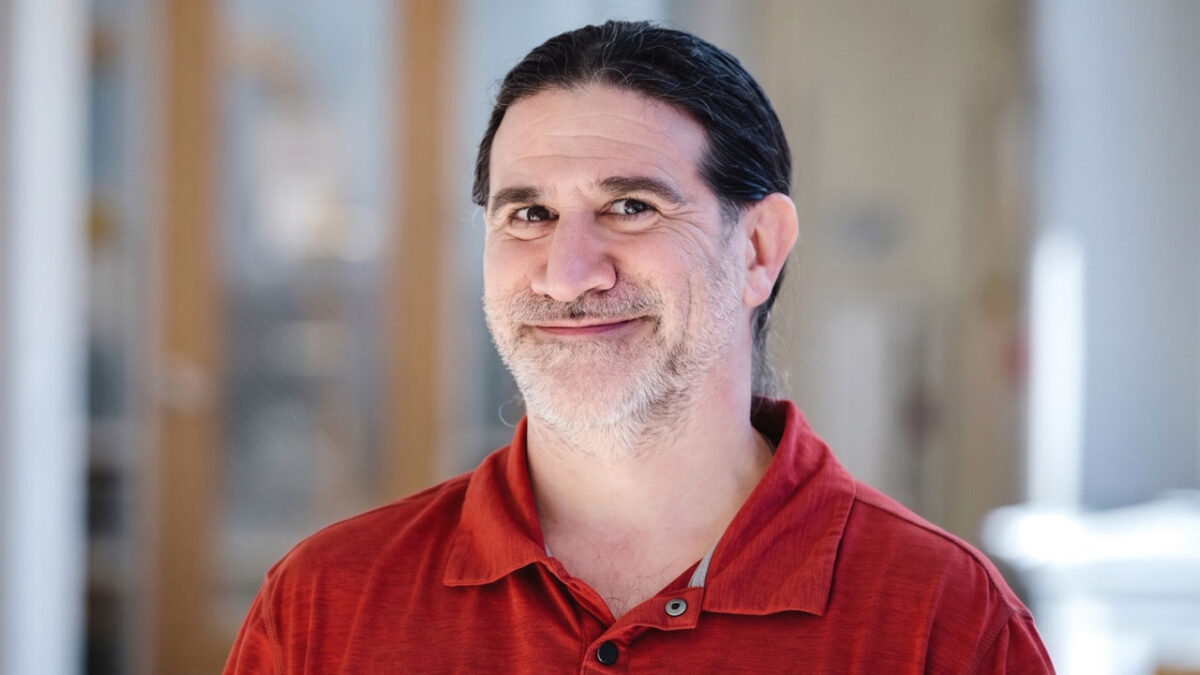
Episode 66 features my conversation with Mike Maresca, the longtime tour manager and monitor engineer for Max Creek.
Mike has been an essential part of the band’s crew since 2004, working to ensure the band is happy with the sound they hear on stage and that their live shows run smoothly. In this episode, Mike discusses his introduction to Max Creek, the technical work involved in managing the band’s monitor mixes, and the “cat-wrangling” logistics of his role as tour manager. Mike also shares his unique perspective on the chemistry between the band members on stage and his thoughts on the fans that support the band.
This episode also features a clip of the song Said and Done performed live by Max Creek at Sterling Stage in Hannibal, New York, on September 3, 2016.
Transcript of episode 66
You’re listening to Hooked on Creek, a podcast celebrating the music, history, and fans of the legendary jam band Max Creek. I am your host, Korre Johnson, and this is episode 66.
Welcome back to Hooked on Creek. I have an incredible episode lined up for you, so thank you for joining me. While I often focus on the magic happening on the stage at a Max Creek show, there is an entire world of “cat-wrangling,” technical innovation, and sheer grit happening just out of view.
In this episode, I am joined by Mike Maresca — the longtime tour manager and monitor engineer for Max Creek. Since joining the crew in 2004, Mike has been an essential part of the band’s live experiences, ensuring the band members get on stage on time and that they’re happy with the sound they each hear during their performance.
In our conversation, Mike talks about his early experiences with Max Creek at The Living Room in Providence, Rhode Island, and how he eventually started working for the band. Mike provides a behind-the-scenes look at the technical challenges of being the band’s monitor engineer, the logistics involved with being their tour manager, and how he works with fellow crew member Steve Desjardins. We also talk about his perspectives on the Creek Freak energy in the crowd and the chemistry he sees between the band members on stage.
I had a lot of fun talking with Mike and I think you are really going to enjoy hearing how he helps make Max Creek’s live shows possible. Alright, now let’s get started.
[interview begins]
Korre: Mike Maresca, welcome to Hooked on Creek.
Mike: Thanks, Korre. Glad to be here.
Korre: Well Mike, to kick things off, I would like you to introduce yourself by telling me your role or the different hats you wear supporting Max Creek.
Mike: Yeah, that’s fine. Currently I’m their tour manager and monitor engineer. So basically, I make sure the band gets on stage and that once they’re on stage, they’re happy with their sound and what they’re hearing.
Korre: How did you first get introduced to Max Creek? What were the chain of events that brought you to this band?
Mike: Shit, bong hits and beer at The Living Room. So, back in my days at URI [University of Rhode Island], I did a radio show called Kind Sounds. Me and my buddy Grizzly Aaron there —we did that for a bunch of years at URI. And then towards the end of our URI days, we reached out to Randy over at The Living Room and we were like, “Yo, we want to do a hippie night or jam night, whatever you want to call it, on Wednesdays at your bar.” And he’s like, “Well, it’s the middle of summer so wait until school starts.”
And then we started — me and Aaron started Grizzly Magic Entertainment, I think is what we ended up calling it. And we would do Wednesday nights at The Living Room and eventually met their road manager at the time, Eric, through that. And Creek was playing at The Living Room way before we started doing Wednesday nights. So, 100% through The Living Room is how I got hooked up with Max Creek.
Korre: The Living Room is a pretty legendary venue, I think, in Max Creek’s history. What was that place like?
Mike: So, I missed the first two Living Rooms. There was the famous bubble — I think that was the one Phish opened up for Creek. And then there was the one across from the old Lupo’s downtown. I only arrived to the “behind the Dunkin’ Donuts and Burger King” Living Room, which was the third version of it. And Randy was a great guy, super helpful to me and Aaron when we stopped doing Wednesday nights.
Aaron kept working there and eventually Aaron and Greg, another sound guy at The Living Room, ended up opening up their own bar called The Parlour over on North Main Street in Providence with a third buddy of ours. So yeah, The Living Room’s been instrumental into Rhode Island’s music scene and me getting a job with Max Creek.
Korre: So, you were listening to Max Creek before you ultimately started working with them, is that right?
Mike: Yes. Yeah, I’d go to The Living Room shows and just kind of bong hits and beer.
Korre: Well then what led to this opening for you to work with the band?
Mike: You know, I was young and dumb, so I just worked for free. I had started helping out putting up posters when we were doing the Wednesday nights — we’re trying to be promoters. So, you know, we would help out with that and then through what we learned doing our own night, you know, we tried to help Creek out a little bit, too. So, we’d help do some flyers when they were playing Providence.
Creek and The Living Room, they helped each other out quite a bit. And towards the end, Creek kept The Living Room — not totally kept it afloat, there were other bands that were just as important as Max Creek to The Living Room, if not more. But, when you pull a few hundred people on a Wednesday night — and Creek would do just a random six weeks in a row on a Wednesday night to help the bar owner out.
There’s a lot of love between Randy and Max Creek and the staff and stuff. Even though most of the staff would make fun of Max Creek because most of the staff at The Living Room were into hardcore or reggae. It was a good mixture of laughter and love for the Max Creek coming out of The Living Room staff. But, you can’t love every show you work or else you’d be unemployed.
Korre: How do you get to be good at being a monitor engineer? Where did these skills come from for you?
Mike: Practice, just like any other job. When I was at The Living Room and we weren’t making money as promoters, I realized that the sound guys always got paid. So, I was like, “Kevin and Greg, teach me how to do this shit.” And they did. And then another buddy of mine at the time worked at Lupo’s and he got me an internship there. So for a while, I worked for cheap pay and free. So instead of going to school, I just kind of jumped in and learned on the fly. Which is good and bad.
When I was talking to Scott [Murawski] about this the other day, how I ended up doing monitors — and monitors are what the band hears. So, there’s me and Steve [Desjardins], Steve’s our front-of-house guy. So, you guys in the audience listen to what Steve does. So when the sound’s really good, that’s Steve. You don’t hear what I do unless it sounds bad. If you hear a squeal or some fucked-up noise, usually that’s me. So, we try to eliminate those noises and, yeah, some shows are more successful than others depending on the gear.
So, learning how to do sound at The Living Room was like trial by fire. On average, we were fixing something or taking apart some speaker before the show at 2 in the afternoon, keeping it going. And it was a lot of fun. And when I was talking to Murawski about this, he’s like, “Yeah, you know, I remember encouraging you being like, yeah, monitors, you can figure it out, you’ll be fine.” I guess I took that to heart.
Korre: I don’t know much about the live stage setup and monitors, but my basic understanding is that there are maybe usually two kind of setups: the floor wedges or the in-ear monitors. Is that right?
Mike: Yes.
Korre: What are the pros and cons or how does a band navigate those choices?
Mike: Well usually it’s by financials. So, most bands don’t start out with in-ears — it’s just easier to use whatever the club has. I always joke if you’re a singer in a band, you should at least have your own microphone. But when you start out, you’re using whatever smelly-ass microphone the club has that’s been spit on by a hundred different people and you just start with what you got. And then sometimes people don’t want to change. Musicians and people in general are creatures of habit. So once they get used to something, they might not want to change.
One thing I’ve noticed with Creek is they are somewhat willing to try new things. I think right now Mark [Mercier], John [Rider], and Bill [Carbone] all use in-ears. Scott uses them in the Mike Gordon band but doesn’t for some reason in Creek. And Jay [Stanley], he’s just on a monitor wedge.
So pros and cons are: in-ears sound clearer, you can hear your pitch of your voice better. The cons are you’re using a wireless kit and wireless can cut out — everybody’s had their Wi-Fi cut out on their computer at some point. Same thing happens to wireless mics and wireless in-ear mixes on stage. And monitor wedges are louder, you don’t have your ears blocked up so you get more of a natural feel. Whereas a lot of people who use in-ears tend to put like a microphone pointed at the audience so they can have a little ambient noise.
I’ve never actually worn in-ears because I’m the monitor guy — you have whatever the club that we’re playing has, whether it’s my headphones or sometimes I have a cue wedge, which in an ideal world is exactly the same speaker that the band is using so then I can listen to each person’s mix. They don’t all take the same thing in their monitor wedge. Everybody’s got their own little desire of what they want to listen to more than other instruments.
Korre: Is it different or challenging when you have the dual percussion drums setup on stage to get that mix right so people can hear through everything?
Mike: I wouldn’t say it’s challenging. You get better with your job the more you do it. Working at clubs — The Living Room on a random sound night, you would have five different bands in two hours. So, your first set and set break for a Max Creek show, I just did five bands on another type of show. So it all adds up. And working with the same band, it gets easier because you’re familiar. It’s the same setup.
We use a good amount of the same microphones at every show and sometimes there’s like — I mean how many times have I played the Met Cafe? You kind of know what you’re getting into when you go back to some of the hometown venues.
Korre: What year was it when you first started working with the band?
Mike: 2004.
Korre: Since 2004 to today, I mean, were you seeing different challenges?
Mike: I mean shit, back then my first show at The Living Room with the band was — the monitor console had missing channel faders and some duct tape holding some shit together. So, the challenges of that room was just getting the shit to work. I mean I’ve gone from analog to digital. So, you kind of have to keep up.
Korre: Yeah, that’s interesting. Your timeline in supporting the band and kind of maybe in the live music scene, you’ve been a witness to this transition to the digital side.
Mike: Oh yeah. I like to have a monitor console, which is a physical desk, but for when I’m setting up before the show, I like an iPad where I can walk around, stand in front of the monitor wedge, check the cables as I walk around the stage. Steve, our front-of-house guy, he’s different. He barely uses an iPad. He knows how. Everybody’s got their own little thing.
And, one of the first things I learned when I was doing sound — I guess I didn’t learn it, somebody told me — they said there’s about a thousand different ways you can do the same shit correctly. So, what works for one person doesn’t work for another in live sound and you can still end up with the end result of a good mix or a good stage sound.
And Steve, luckily for him at front of house, he can kind of hear the changes he’s making because the speakers are pointed at him. My speakers aren’t pointed anywhere near my direction. So when I make a change, if I’m not listening to it on my headphones or I don’t have a cue wedge, I have no clue — I mean, if it’s still feeding back, I can tell I didn’t fix the problem.
Korre: How are the band members communicating with you on stage? Is it just by line of sight?
Mike: I’ve had Bill throw a drumstick at me once or twice. Luckily he missed my kid who was standing behind me. So that was good, nobody got hurt that day. Definitely yelling. And then most of my job is just look at the band. I spend a lot of time looking at those ugly bastards. And that’s literally my job. If they need something, I’m supposed to be paying attention. So, I try not to talk to people during the show because then if I’m not paying attention, I’m not doing my job. And, you know, they can see it — I’m right there. Hence the throwing a drumstick.
Korre: Well, you’d mentioned you’re also a tour manager. What does that all encompass? What does that mean?
Mike: Advancing with the show, to make sure they have what we need sound-wise. You know, make sure all the brown M&Ms are taken out of the hospitality rider. What time we show up, if we’re getting hotels, who’s driving who, are we rehearsing, are we sound checking, is so-and-so going to be late. Everybody go the bathroom? Good, get the hell on stage. Settling up at the end of the night.
It’s the cat-wrangling portion. But, when it’s a really long set break, it’s because I’m not too motivated to make them go back on stage quicker. You know, all those 40-minute set breaks, you can thank me. And then if it’s 20 minutes, you can also thank me. Some shows it’s not as important to get the band back on stage quick. Other shows it matters depending on the venue and the scene, and the curfew.
Korre: Give me an example of when things go well or when things don’t go great.
Mike: So, part of my job in advancing is setting up. I’ll advance a show and be like, “Hey, we need a monitor desk. This is what the band likes, this is what we want.” “Yeah, we’ll set it up, it’ll be ready for you during the day of the show.” And I show up to the venue, monitor desk is not set up. And the sound guy goes, “I’m going to set it up in the half hour between set change.” And I just look at him and go, “You just fucked my whole day. That’s not physically going to happen.”
I’ve definitely had that happen a couple times, where the guys overestimate their knowledge and abilities. I mean everybody makes mistakes, but that mistake is just something that’s avoidable by setting it up in the morning when you know you have time. So, that’s definitely gone wrong. Speakers not working has also gone wrong.
Korre: Are the different venues more or less accommodating to you or maybe it’s the management or the owner of the venue?
Mike: I mean at this point, 55 years, the guys kind of know what to stay away from and what not to. We definitely play some new venues — we just played that place in Portsmouth, New Hampshire, 3S Artspace. That was a new venue. And yeah, we played the Shea Theater as well. So, that weekend was a rarity where we did two new venues in the same weekend. So, those were the biggest mystery shows, you know, the new venue.
Last year we played Vinegar Hill and we had fun, so we’re going back. The Colonial Theatre in Pittsfield — we’re friends with Rev Tor, he’s got a large part in helping to get us in there. So, at this point, the places we go back, they know we’re old and in our ways.
Korre: Do you have, in your role, a relationship with like Scott Murawski’s guitar rig and his pedals and all that stuff? Are you also involved in the setup and just making sure all that’s correctly wired and on stage the right way?
Mike: Yeah. The way it kind of works out so far is Steve kind of deals with John’s bass rig. I end up with Scott’s guitar rig and Mark’s keyboard rig. And the drummer mostly sets up their own stuff — we’ll help out with some of the heavier stuff. And, Steve can set up the keyboard. Steve can set up the guitar. But, all the guys are willing to help out with their own gear. So, if everybody’s running late or whatever, there’s definitely a good amount of working together.
And you know, it’s the same guys, so their gear is the same show-to-show unless it’s a super small stage where we’re taping microphones to the wall like we had to do at Thunder Road in Boston one time. Just one microphone we had to tape to the wall. It was fine. I mean, The Living Room, we used to throw microphones over the fire sprinkler pipes and hang them down over the drums.
Korre: So there’s a level of creativity or innovation that helps you out in this role?
Mike: There is. And you know, the band’s been innovative. They built their own sound systems in the ‘70s — Quack Sound. John Rider runs his own PA company, so he’s always fiddling with new gear. Murawski, he’s had not as many gear changes as John Rider, but there’s been a good variety of pedals and speakers Scott’s used. You know, we don’t really have a huge road crew. It’s me and Steve and occasionally a helper or two. But, some bands have 12 guys on their road crew and they have all the time in the world. We show up to a venue, hope everything works and try to set everything up in three hours.
Korre: Well, Mike, on behalf of all the fans, I want to say thank you.
Mike: Yeah, well, it’s fun. I mean, without the fans, there’s boring shit. I’ve been to a Max Creek rehearsal — let me rephrase that, I’ve slept through a Max Creek rehearsal. The energy level is completely different between watching them in an empty room and in a full room where they’re feeding off the fans.
For our fans — you all know we smoke pot. Sometimes you’re too high and you’re looking on stage like, “Goddamn.” And you can see it, the band’s like, “Yo, we just ripped through this crazy fucking awesome song,” and ghosts. And it’s just the reality is some venues are way more pot-friendly than others. Harry’s Farm in Maine, this would happen a lot of times — like the crowd would be too high, like 10 edibles deep and it’s tough to play to a crowd that’s on 10 edibles and just really stoned.
Just saying, you know, like a good happy loud drunk is sometimes better than a really stoned crowd. But then other times when they’re playing really quiet songs, you don’t really want that drunk crowd. So, it can go any which way. And the band tries to read off that energy.
Korre: What are some of your favorite Max Creek songs?
Mike: I love Mark’s songs. He hasn’t written a lot, but the ones he writes are freaking great. So I love Said and Done, King of California. Some of his songs — I’ll be honest, I’m not the most informed Max Creek member on who wrote what songs and stuff. So, sometimes I’ll realize that oh shit, that’s a cover? But I heard it first through Creek and they play it so well, sometimes I’m like, “That’s their song, it’s not that other person’s.” Said and Done, I know Mark wrote. King of California, I don’t know why I’m thinking somebody else wrote it right now.
Korre: Yeah, that’s a cover, yeah.
Mike: But I fucking love when he does it. Like I said, the first time I ever heard it was Mercier and I’m just like, he nails it, it’s his song. In all honesty, I’m awful with song titles, so at the end of a show I will look for the audience setlist to see what the hell they played. Because I’m paying attention, I’m not trying to remember things.
Korre: Well I would imagine over the years you’ve seen a number of bands and musicians interact with each other and you’ve had this sort of front-row seat to Max Creek. Talk to me about the chemistry you see between these band members and what you see from your vantage point.
Mike: I mean, I can hear the snide jokes and the funny jokes sometimes. I can definitely see the glances. And, I also see them not needing to look at each other to know what the hell’s going on musically. They have a very tight bond. They’re all good players. So, there’s a good chemistry there. People still wouldn’t be showing up.
You know, “I haven’t seen Max Creek in 15 years” and then they come back and they’re back. For 55 years to keep anybody going back to see you is crazy. Now we have grandkids and stuff coming in. It’s a good vibe. So, the chemistry is there. Like if they weren’t friends, it wouldn’t be as enjoyable.
Korre: I have just a great amount of appreciation so for these fans — these Creek Freaks. How do you view the fan base of Max Creek?
Mike: Oh, that’s a loaded question. Who do I want to piss off today? So, being stuck behind the stage — let me preface it by saying, most of the time as far as individual people go, I only notice you if you’re kind of a dumbass, for the most part. Because I’m backstage. For like the news of some stupidity or something, I tend to hear about it more than like the awesome fan who’s just chilling.
So, if I’m hearing about a fan, it’s possibly because they did something stupid or, you know, had an incident or threw up in the middle of the floor because they’re all shitfaced. There’s one venue who’s like, “Well, you guys can’t play here anymore because somebody was fucking in the bathroom.” So, I mean that’s the type of shit I have to deal with as the road manager as well. It’s like, “Yeah, you know, so-and-so was fucking in the bathroom, we can’t have you guys here anymore,” or somebody was throwing bottles in the parking lot.
One of the venues we used to play was Eastover. And Eastover was Rev Tor, our buddy — he hooked us up with this venue. It’s like a 200-acre Civil War museum/bed and breakfast in Lenox, Massachusetts, and that shit was crazy. We just took over the whole 200 acres. So, there was like 300 Creek Freaks stuck on one property for three days with a pool, buffets, music till 6 in the morning. It was fucking awesome. So, those events were cool.
I started to meet a few more people when I wasn’t necessarily working all the time. And then with Wormtown and StrangeCreek Festival through the Creek, I’ve had a few people help volunteer and they surprised the hell out of me with the quality of effort and hard work they can put in. So, I’ve been surprised by some of the crazy-looking fucking people in the crowd by how hard they can work and they all seem to confuse me at times — the good and the bad.
But it seems that Creek is a place where people can let their Freak flag fly and they fly it, man. I’m like, “I’m part of the Freaks and I’m still like, holy shit, that person’s out there.” But, Creek’s a nice safe space where people can come and have a good time and do that type of shit and then have a designated driver to get them home.
Korre: Well, I think Max Creek is a legendary band. I mean, this is why I’ve done this podcast and invested this many years just talking about the band.
Mike: Yeah. The only reason you got me on this goddamn thing because I read that you’re going to stop and I was like, “Son of a bitch, I guess I should do it.”
Korre: That is true. I am getting hear the end. And I have asked you, Mike, a couple times to do this, so I’m glad something worked to get you on the podcast. But this band, I think, is historic. What is it like for you to be part of their journey, part of what makes Max Creek who they are? What does that feel like for you?
Mike: I mean it’s been going on for so long it kind of just feels like normal. You know, it’s a bit of family. Like, there’s blood family and then there’s family you choose to not leave. And this has been a good mixture of family and it’s been great for work. I mean, I can’t find a better job where you can go hang out and see music.
I now have kids. Creek for me with the kids — they don’t play a lot, so it’s good. I can still see my kids, which is the same reasons they kind of slowed down in the ‘90s — everybody had family and kids and whatever. So, it’s pretty cool, they are definitely a family vibe.
You know, if I fuck my job up, they’re still going to fire me, so I try not to. But, it’s a good vibe for having a bunch of people to work with. I mean shit, I’ve seen — I started out with [Scott] Allshouse on drums, then we had Greg Vasso, and then we had the Degugs [Greg DeGuglielmo] and Vasso, I think? No, it was Allshouse and Vasso for a while.
So, I mean I’ve had like three or four drummers, a couple percussion players, three different sound guys, multiple light guys. Crew, I’ve met a bunch of crew from the years that still go to shows.
So, even the people who are no longer working for the band, I haven’t yet to find too many people who were pissed that they did. I have yet to find a person who’s pissed they went to a Max Creek show. So, it’s a party. They still do it.
Korre: Well Mike Maresca, thank you so much for supporting Max Creek and for working for the band and thank you for being on the Hooked on Creek podcast. I had a lot of fun talking with you.
Mike: Yeah, no problem, Korre. It was great.
Korre: All right, take care.
Mike: Thank you, buddy. Until next time.
[interview ends]
Huge thanks to Mike Maresca for joining me on the podcast and sharing his perspectives on working for Max Creek. The next time you see Mike at a show, please tell him thanks for everything he does to support the band and their live performances. If you are curious, this episode featured a clip of Max Creek performing the song Said and Done live at Sterling Stage in Hannibal, New York, back on September 3, 2016.
That concludes episode 66 of Hooked on Creek. If you have feedback about this episode, please visit hookedoncreek.com and click the contact link to send me a message. I would love to hear from you. Thanks for tuning in!